© WCS | Kang-Chun Cheng
14 – 15 June
Diani Beach, Kenya
INTRODUCTION:
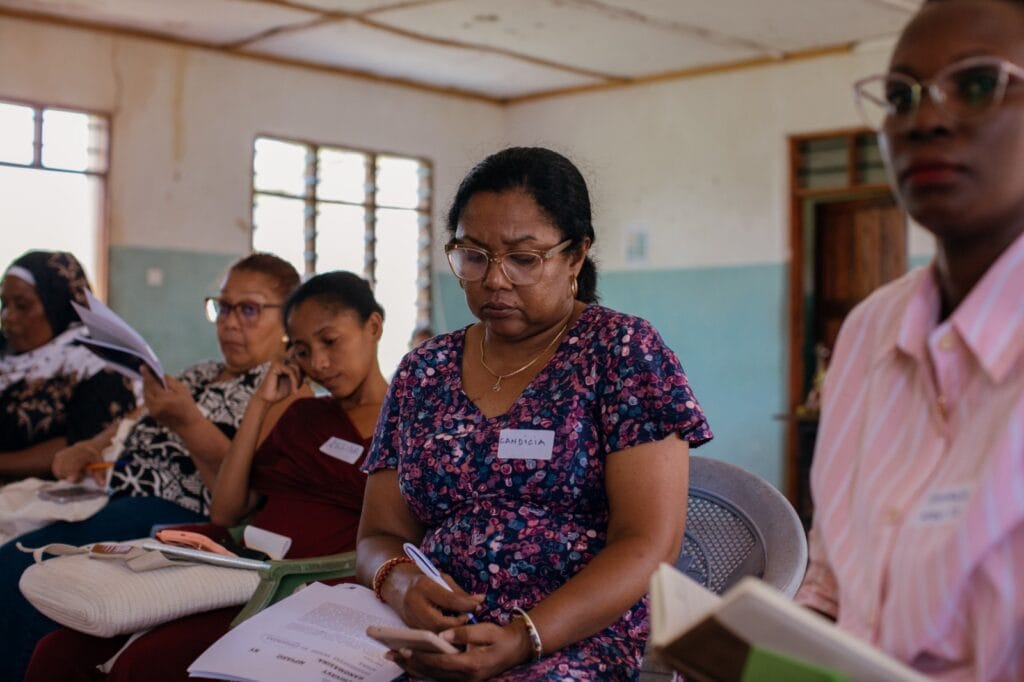
We, the women leaders from the freshwater-coastal communities from across 11 countries in Africa, have gathered in Diani Beach, Kwale County, Kenya, in recognition of the vital role that women play in the conservation, sustainable use, and governance of our waterways, from the rivers to the oceans. Without women, there is no ocean guardianship. Through these waters, we are guided by our shared values of solidarity, speaking truth to power, innovation through creativity, and strength in leadership. We are united across our diverse livelihoods in small-scale and artisanal fisheries, fish processing and trading, community-led conservation, and management of marine protected areas. We are guardians of the ocean, because we recognize that our shared futures — and those of the generations to come — will only flourish through our care for the ocean and all waterways.
This declaration is connected to a global process of the Women Ocean Guardians Initiative, which is expanding from Latin America and the Caribbean to Africa, and to South-East Asia and the Pacific. Launched at the United Nations Ocean Conference in June 2025, the Women Ocean Guardians Initiative is a global public–private partnership that places women at the forefront of ocean conservation and the sustainable use of marine resources within formal decision-making systems. By strengthening their meaningful participation in governance processes, the Initiative seeks to transform ocean governance toward more resilient, inclusive, and sustainable outcomes. The Initiative is led by Wildlife Conservation Society (WCS), Conservation International (CI), and the Global Environment Facility (GEF), in direct support of the Women Ocean Guardians themselves. It has secured endorsement from eight national governments and over twenty-five organizations and multilateral partners through a shared Voluntary Commitment to inclusive ocean governance.
We are the guardians of our continent’s freshwaters, rivers, tributaries, coastlines, and seas. We are the protectors, the nurturers, the bearers of responsibilities, the leaders. We represent millions of women across over 30,500 km of Africa’s coastline. We are the women who live, use, care for, conserve, and depend directly and indirectly on marine-coastal areas. As women, we fulfill a fundamental role in the sustainable management of marine resources, while also facing disproportionate challenges due to violations of our safety and wellbeing, increased health risks and exposure, barriers to economic autonomy, devalued working conditions, and political exclusion from decision-making. At the same time, we carry with us the strategies and solutions to caring for ourselves, our communities, and our waters. It is only through the meaningful inclusion and leadership of Women Ocean Guardians that we will see the changes and progress needed — from the shorelines of our communities to the policy frameworks of global decision-making platforms.
We recognize the key advances in global and regional policy frameworks that guide our efforts. We turn to the Voluntary Guidelines for Sustainable Small-Scale Fisheries for the protection, inclusion, and support of women in artisanal and small-scale fisheries, fish processing, and trading; the Global Biodiversity Framework, for the global goal of protecting and accelerating the fulfillment and sustainability of 30% ocean protection through equitable and inclusive governance processes, ensuring the participation of marine and coastal women, and generating enabling spaces and financing for their full involvement in decision-making; the Maputo Protocol to the African Charter on Human and Peoples’ Rights on the Rights of Women in Africa; and the various relevant interconnected Sustainable Development Goals.
Future policy milestones should strengthen gender parity in ocean governance and ensure responsive and sustainable financing, deepen linkages between conservation and sustainable fisheries policies, and institute clear and accountable implementation mechanisms — so that these policy advancements are felt from the ground up in the daily lives of marine-coastal women and their communities.
We come together to affirm our commitment to strengthening our leadership, organization, and shared work across sectors of conservation and sustainable ocean use. Through our joint efforts, we deepen our knowledge and strategies to overcome the obstacles facing our communities, our oceans, and our marine and coastal areas. These challenges have historical roots and are experienced differently across our diverse contexts throughout Africa.
Women Ocean Guardians are ready to lead. We call upon governments, international organizations, civil society, local governments, private companies, academia, and other interested sectors to raise and recognize our voices on the following issues:
VIOLENCE
Gender-based violence, extreme exploitation, political targeting, digital violence, and technological exclusion continue to violate the safety, wellbeing, dignity, rights, and full participation of women and girls in coastal and ocean-dependent communities. These are longstanding challenges that generate fear, shame, stigma, and trauma, and that are compounded by deep-rooted cultural beliefs and the persistent failure of institutional systems to protect and support women. The collection and monitoring of data on violence against coastal women remains critically insufficient. We reject the ongoing violations of sexual and human rights, coercion, crime, financial abuse, gender-based violence, and weak safeguarding systems and accountability mechanisms. Our calls for action are as follows:
- Strengthen economic empowerment in coastal communities to reduce vulnerability to gender-based violence and improve employment conditions across fisheries.
- Promote community-wide awareness of gender-based violence, exploitation, safeguarding, and human rights through education, outreach, and public engagement initiatives at all levels of society.
- Establish and strengthen safe spaces and services where women and girls can report abuses, access support, share experiences, and participate freely in decision-making processes without fear of discrimination or retaliation.
- Advocate for the effective implementation of laws and policies that protect women and girls from violence, exploitation, financial abuse, and other forms of harm, while ensuring access to justice and survivor-centered support services.
- Create platforms for open dialogue among communities, leaders, institutions, and stakeholders to address harmful practices, challenge social norms that perpetuate violence, and foster collective responsibility for prevention.
- Promote the active involvement of men and boys as partners in preventing violence, advancing gender equality, and creating safer and more inclusive communities.
- Strengthen economic empowerment in coastal communities to reduce vulnerability to gender-based violence and improve employment conditions across fisheries.
HEALTH
Our health and wellbeing as guardians is directly affected by our geographic, climatic, economic, political, and cultural conditions. Insufficient support for knowledge-sharing, capacity-strengthening, and education results in increased health risks for girls and women, including early and teenage pregnancies, maternal and reproductive health challenges, sexually transmitted diseases, and other infectious illnesses. We face high physical and mental health burdens due to precarious, unsafe, and unhygienic working conditions, livelihood and food insecurity, oppressive gender norms and gender-based violence, inadequate water and hygiene infrastructure, and the impacts of pollution and climate change — all compounded by limited access to health services. Our calls for action are as follows:
- Guarantee safe, hygienic, and dignified working conditions with proper protective equipment, infrastructure, and maternal and reproductive services for the physical, mental, and communal wellbeing of marine-coastal women.
- Establish basic first aid training and support networks for freshwater-coastal women on the frontlines of health emergencies in isolated geographic contexts.
- Extend comprehensive sexual and reproductive health education to freshwater-coastal women, girls, boys, and men.
- Promote universal healthcare coverage that accounts for the specific health needs of marine-coastal women, includes psychosocial support services, and advances health and wellbeing infrastructure in coastal areas, including potable water services.
WORK
Our work is often unseen, unrecognized, and undervalued. We face barriers to professional development rooted in gender roles tied to motherhood, menstruation, pregnancy, childbirth, and caregiving. Our physical, mental, and emotional strength is underestimated due to gender-oppressive cultural norms and expectations, which limits available opportunities — resulting in workplace discrimination and harassment, precarious and undignified work conditions, and restricted professional advancement. Furthermore, our exclusion from governance spaces leaves us vulnerable to externally imposed decisions and economic conditions, such as price fluctuations for ocean products and services. This generates psychosocial effects including reduced self-esteem, limited leadership pathways, and lack of economic autonomy. Our calls for action are as follows:
- Increase recognition and social protection coverage and safety nets for all forms of women’s work — paid and unpaid, formal and informal — that cares for the ocean and for coastal and freshwater communities.
- Promote accessibility, innovation, and flexibility in registration, certifications, access to information, financial services, employment services, and digital inclusion.
- Ensure inclusive and safe working conditions, including extended maternity leave, childcare facilities, and flexible arrangements that support the health and wellbeing of marine-coastal women.
- Establish, implement, and uphold fair trade agreements and labor standards that protect the livelihoods of marine-coastal women who depend on ocean and freshwater resources, and expand their economic opportunities.
- Extend and support capacity-strengthening and training programs to upskill and promote the employability, financial literacy, and entrepreneurship of women guardians.
- Support and finance alternative livelihoods for Women Ocean Guardians, bridging conservation and small-scale fisheries with ecotourism.
LEADERSHIP
We recognize that women and girls across many African contexts continue to face significant barriers to leadership. These barriers frequently result in limited meaningful participation in ocean governance, policy-making, community development, and the strategic implementation of shared priorities. We acknowledge the persistent challenges of limited confidence, restrictive social and cultural norms, gender bias, inequitable access to financial resources, and insufficient targeted financing for women-led initiatives. Our calls for action are as follows:
- Expand access to and investment in leadership training, mentorship, succession planning, regional benchmarking, and skills development programs — including women-led research — that strengthen women’s confidence, agency, and ability to influence decision-making processes.
- Strengthen lobbying and advocacy efforts to eliminate gender bias and promote inclusive governance structures that value and amplify women’s voices.
- Advocate for policies, budgets, and financing mechanisms that intentionally address gender inequalities and ensure equitable participation and benefits for women and girls, from local decision-making to international policy-making in fisheries and ocean governance.
- Promote community awareness initiatives and actively engage men and boys as allies in advancing gender equality and supporting women’s leadership.
- Increase investment in women’s leadership and decision-making through sustainable financing mechanisms, resource mobilization strategies, and training that equips women with the skills to access and manage funding opportunities effectively.
Women Ocean Guardians
Women Ocean Guardians is a public-private initiative that elevates women frontliners, de-siloing conservation and sustainable use, to participate in meaningful decision-making, transforming ocean governance for more resilient and sustainable outcomes. View the full commitment here. Sign on as a government, institution, or organization here.